

Picture two almost identical YouTube videos. Same topic, same thumbnail, same quality. One ends in silence. The other finishes with a clear, simple line like “Now watch this next video to put this into action.” After a month, the second video has double the watch time, more subscribers, and more clicks to a website. That small sentence is the only difference, and it is part of why YouTube call to action examples matter so much.
A call to action, or CTA, is the short prompt that tells viewers what to do next. It can be spoken on camera, shown as text, or added as a clickable button or end screen. Without it, people often watch, nod, and move on. With it, they subscribe, comment, watch another video, or check out an offer.
CTAs influence the numbers that YouTube cares about most. When we ask viewers to subscribe, we grow a base of people who come back. When we guide them to a related video, total watch time climbs. When we invite comments, engagement rises. All of these actions send a strong signal to the algorithm that our content keeps people on the platform.
“If you don’t ask, the answer is always no.”
That old saying fits YouTube perfectly. Many viewers will happily take a next step if we simply ask them clearly.
Many creators put hours into scripting, filming, and editing, then rush the ending with a generic “Like and subscribe” or no CTA at all. That is like spending days on a great store display and then forgetting to open the door. The content is there, but no one is guided to take the next step.
In this guide, we walk through the basics of YouTube CTAs, the core elements that make them work, and where to place them inside a video. Then we break down 15 proven YouTube call to action examples you can copy, adapt, and plug straight into your scripts. These examples cover goals such as growing subscribers, raising watch time, sending traffic, and collecting leads.
We also share how HypedX can help more people actually see your CTAs, plus a simple testing process to keep improving them over time. By the end, you will have ready-to-use lines, a clear plan, and the confidence that every new video nudges viewers toward real action.
Key Takeaways
Before we dive deep, it helps to keep a few key ideas in mind as a quick reference.
Strong CTAs turn passive viewers into active supporters. Without a clear prompt, many viewers leave after watching, even if they liked the content. When we guide them with a simple next step, we turn views into real progress for the channel.
The best CTAs are short and focused. One clear action that fits the video is usually enough. A range of about five to ten words often works well. When we avoid clutter and long wording, viewers understand the ask in a split second and feel less mental friction.
Placement is as important as wording. Light early prompts can help keep viewers engaged, while strong asks make more sense after value is delivered. Mid-roll and end screen prompts work well because they meet people when attention is already high.
Match each CTA to a specific goal. Different CTA types support different aims such as audience growth, engagement, website clicks, or email signups. When we match wording and format to one goal, every video has a clear job instead of trying to do everything at once.
Mix formats for better results. CTAs work best when we combine spoken lines, on-screen text, and clickable elements instead of relying on only one format. Repeating the same action in more than one way helps more viewers notice and remember it. Over time, testing different versions and placements in our analytics helps us steadily raise results.
What Is a YouTube Call to Action and Why Does It Matter?

A YouTube call to action is a direct prompt that tells viewers what to do next. It can be a spoken line, a text overlay, a card, an end screen element, or a link in the description. The key point is that it gives a clear instruction such as “Subscribe for more weekly tips” or “Click the link below to download the guide.”
CTAs act as the bridge between someone watching and someone engaging. Without that bridge, many people enjoy the video, learn something useful, and then tap away to the next recommendation. With a CTA, we gently guide that interest toward a follow-up step that supports our goals, whether that goal is community growth, sales, or simple brand awareness.
From a business point of view, CTAs turn one flat view into a deeper relationship. Research on what drives in-stream advertising effectiveness shows that strategic prompts significantly influence viewer behavior and conversion rates. A single subscriber may watch dozens of future videos. A viewer who clicks through to a website might sign up, buy, or share our work elsewhere. All of those actions start with a clear ask that arrives at the right time.
CTAs also feed YouTube’s own signals. When viewers subscribe, comment, like, and watch more than one video in a row, the platform reads that as proof that our content deserves more reach. That can place our videos in more search results and suggested feeds. Skipping CTAs means giving up a simple way to raise those signals with each upload.
We can picture two channels that post the same number of videos with similar quality. One ends most clips with a strong, relevant CTA. The other does not. Over months, the first channel gathers more subscribers, longer watch sessions, and more visits to its links, even though the actual content is similar. That is the quiet power of steady, thoughtful CTAs.
“Marketing is a contest for people’s attention.” — Seth Godin
A clear CTA tells viewers exactly where to focus that attention next.
The 5 Core Elements of High-Converting YouTube CTAs
Not every call to action works the same. Some lines feel natural and easy to follow, while others feel vague or pushy. When we look at high-performing CTAs across channels, five simple elements appear again and again.
Clarity And Conciseness
Viewers should understand the ask at a glance. Lines such as “Subscribe for weekly videos” or “Download the free checklist” work better than long, polite speeches. When we aim for five to ten words, we cut the fluff and avoid confusion.Action Verbs Up Front
Strong CTAs start with action verbs. Words such as subscribe, watch, download, join, try, book, and get tell people exactly what to do. Compare “Maybe you could think about subscribing” with “Hit subscribe for next week’s lesson.” The second line feels direct but still friendly, and it gives a clear instruction.One Main Action At A Time
We get better results when we focus on one primary action. If we say “Like, comment, share, subscribe, and click the link,” most viewers do none of them. This is simple choice overload. A single, sharp ask such as “Comment your biggest question below” or “Watch this next video” keeps attention on one path.Context That Matches The Moment
Context matters. A CTA should feel like it belongs at that moment in the video. After a tutorial, asking viewers to download a matching checklist fits their mindset. After a story-based vlog, inviting them to subscribe for the next chapter feels natural. When the ask connects to what they just watched, people see it as helpful, not random.Honest Urgency When It Fits
A gentle sense of urgency can nudge people to act now instead of later. Phrases such as “Grab your spot before seats run out” or “Sale ends soon” give a small push. This should always stay honest and tied to a real time limit or limit on quantity. When viewers believe a benefit might slip away, they move faster.
Before we lock in a CTA, it helps to run a quick mental check. We can ask if the line is short and clear, if it leads with a verb, if it points to one main action, if it fits the part of the video where it appears, and if a small time cue would make sense. When all five parts line up, our chances of a click or tap rise sharply.
Strategic CTA Placement – When and Where to Deploy Your CTAs

What we say in a CTA matters, but when we say it inside the video matters just as much. Viewer attention changes from the start of a video to the end, and our asks should match that pattern instead of fighting against it.
At the very beginning, in the first thirty to sixty seconds, many viewers are still deciding whether to stay. A light ask here can work, such as “Stick around until the end to see the full setup” or “Subscribe if you want more tutorials like this one.” We avoid heavy sales language at this point, because we have not yet given real value.
In the middle of the video, attention often hits a peak, especially right after we explain a key point or solve a problem. This is a strong moment for a contextual CTA. For example, after showing a three-step process, we might say, “If you want a printable version of these steps, use the link in the description.” Viewers already feel helped, so they are more open to a follow-up step.
Near the end, we talk to the people who stayed all the way through, which means they are highly engaged. This is the best place for stronger asks such as “Book your free demo today” or “Watch this next video to apply what you learned.” YouTube’s end screen tools fit perfectly here, because they give clear, clickable options while interest is still high.
We can also support our main CTAs with subtle reminders across the whole video. A small subscribe watermark, a lower-third banner that appears for a few seconds, or quiet text near the bottom can lightly repeat the same ask. When we match the intensity of the CTA to where viewers are in the story, we respect their time and raise the odds that they act.
YouTube CTA Formats – Choosing the Right Delivery Method

On YouTube, we have several ways to deliver a call to action, and each one has strengths. The best results often come when we combine more than one format for the same ask, so viewers hear it, see it, and can click it with almost no effort.
Spoken Or Verbal CTAs
Spoken or verbal CTAs feel the most personal. When we look into the camera and say, “Subscribe for more weekly breakdowns,” it feels like a direct request from one person to another. Verbal CTAs work well for community actions such as subscribing, commenting, and sharing, because they sound like a conversation.Text-Based CTAs
Text-based CTAs appear as titles, captions, or graphics on the screen. They help people who watch with the sound off and make details easier to remember. If we want to share a website, a discount code, or a short phrase to comment, placing it in text on the screen for five to ten seconds gives viewers time to read and act.YouTube Cards
YouTube cards are small interactive pop-ups that can appear during the video. We can time them to match key moments, such as offering a related video right when we mention that topic. Cards shine for mid-roll CTAs where we want to guide viewers to another video or playlist without breaking the flow.End Screens
End screens appear in the last five to twenty seconds and are built for strong CTAs. We can add a subscribe button, a recommended video, or a playlist that continues the topic. When paired with a spoken line like “Click here to see this method in action,” end screens turn a good finish into a powerful next step.Description Box CTAs
The description box acts as a static home for our links and written CTAs. Many viewers open it to look for resources, links, or gear lists. We can add clear text such as “Download the free checklist here” or “Follow on Instagram for behind-the-scenes clips,” then support those lines with spoken and on-screen prompts in the video itself.
By picking a main format for each goal and backing it up with one or two more, we make it easy for viewers to say yes to our requests without hunting around the page.
15 Proven YouTube Call to Action Examples That Drive Results
Now that we have the basics down, we can look at specific YouTube call to action examples you can plug straight into your videos. We group these fifteen CTAs by goal so you can pick the ones that match your current focus, whether that is more subscribers, higher watch time, or more leads.
Each example includes the exact phrasing, the goal it supports, where it works best in a video, and why it tends to convert well. Feel free to adjust the wording to match your voice and niche while keeping the core idea the same.
CTAs for Building Your Subscriber Base
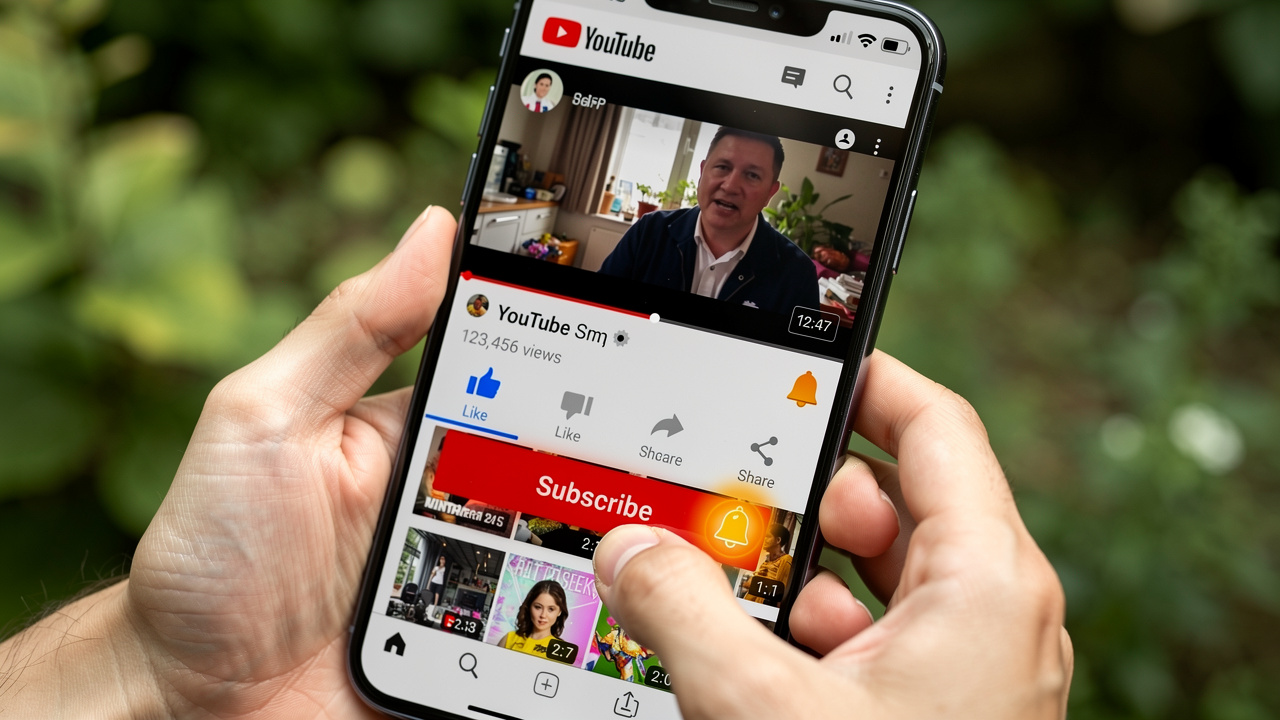
Growing a steady base of subscribers gives our channel stability. These viewers see new uploads faster, click more often, and boost early performance for every video.
Example 1 – “If You’re Getting Value, Hit That Subscribe Button”
This line links the act of subscribing directly to the value viewers just received. Studies examining YouTube ads and calls to action demonstrate that value-first approaches significantly improve conversion rates compared to immediate asks. That small “if” at the start makes the ask feel fair and earned rather than pushy. We can place it after a key tip, in the middle, or near the end, once we have already helped the viewer.
Channels such as Business Insider keep their subscribe prompts clean and simple, often using on-screen buttons for several seconds so people have time to react. We can copy that idea by adding a clear subscribe graphic that appears while we say the line. Variations include “If this helped you, hit subscribe” or “If this saved you time, subscribe for more.”
Example 2 – “Subscribe and Turn On Notifications So You Never Miss an Update”
This CTA stacks two related actions into one smooth line. We ask for the subscription and the notification bell together, framed around the benefit of not missing future content. The phrase “never miss” gently taps into fear of missing out without sounding harsh.
This works well right after we tease upcoming videos or mention a series, such as “Next week we cover the advanced setup.” At that point, viewers who enjoyed this video now have a clear reason to stay close. We can adapt it with lines like “Subscribe and tap the bell so you catch the next part” or “Subscribe with notifications so you always see new uploads first.”
CTAs for Increasing Watch Time and Engagement

Watch time and engagement sit at the heart of channel growth. These CTAs keep viewers on our channel longer and prompt them to speak up.
Example 3 – “Now That You Know [Topic], Watch This Next Video to See It in Action”
This line builds a direct bridge between what viewers just learned and what they can learn next. Channels such as VidIQ often tease the next clip right before the end screen appears, saying something like, “This next video shows you how to apply this step by step.” We can place our CTA in the final ten to fifteen seconds and pair it with a clickable thumbnail.
From an algorithm point of view, this raises session watch time, because viewers stay on our channel for more than one video. We can create many versions, such as “Now that you know the basics, watch this next video to set everything up” or “You learned the strategy, now watch this video to see real examples.”
Example 4 – “What’s Your Biggest Challenge With [Topic]? Let Me Know in the Comments”
Questions like this pull viewers into a real two-way conversation. Instead of a bland “Leave a comment,” we ask for a specific, personal answer. Research shared by firms such as Backlinko has shown a strong link between comment volume and higher rankings, so this kind of CTA helps both community building and visibility.
Open questions work better than yes or no prompts, because they invite longer answers. We can ask, “What part of this process feels hardest right now?” or “Which step would you like me to go deeper on in the next video?” Over time, those answers also give us real ideas for future content.
Example 5 – “Comment ‘[Specific Word]’ and I’ll Send You the Link”
This clever mixed CTA first asks for a simple, low-effort action and then rewards it. For example, “Comment ‘checklist’ and I will reply with the download link.” Brands like Connecteam use this style to raise comment counts while also sharing access to free tools or trials.
The viewer’s first action is easy and public, which boosts engagement signals on the video. The second step, where we reply with a link or code, brings in leads and trial users. This works well for lead magnets, free trials, or special resources that match the video topic. We can adjust the word and offer, such as “Comment ‘SEO’ and I will send you the full guide.”
CTAs for Driving Website Traffic and Conversions
At some point, many channels want to send viewers off YouTube to a store, a booking page, or a sign-up form. These CTAs guide people off-platform in a clear and friendly way.
Example 6 – “Head to [YourWebsite.com] to Try It Today”
Spelling out the exact website, as companies like Buffer do, removes confusion and makes it easier to remember. This is stronger than a vague “Check the link below,” because people know the name of the site they are about to visit. We can say this near the end after a solid demo or case study.
For software, we might say, “Head to YourApp.com to try it today.” For a coaching business, “Head to YourName.com to see how we can work together.” The key is a short, direct sentence that connects the value in the video to the next step on the site.
Example 7 – “Shop Now and Get [Specific Discount or Offer]”
This CTA works well when we sell physical or digital products to an engaged fan base. Creators such as Jimmy Tatro direct viewers to their merch stores with simple offers like “Shop now and get free shipping this week.” The specific benefit (“free shipping” or “25% off”) gives a reason to act now.
We should match the offer to our margins so the deal feels good but still makes sense for the business. Lines like “Shop now and get 20% off with code YOUTUBE” or “Shop now for early-bird pricing before it goes up” give viewers a clear reason to click during or right after the video.
Example 8 – “Book Your Free Demo to See How This Works for Your Business”
For B2B channels or service providers, this CTA moves viewers from interest to a real conversation. The word “free” lowers the risk, while “for your business” makes the offer personal and relevant. We can use this after showing a clear result, such as a case study or a before-and-after breakdown.
Place this toward the end, along with a clear on-screen link or mention of a short URL. Variations include “Book your free strategy call to see what this would look like for you” or “Book your free demo and let us walk you through live.”
CTAs for Lead Generation and Email List Building
Email lists and lead magnets help us keep in touch with viewers even when they are not on YouTube. These CTAs invite people into a deeper channel where we can share more value.
Example 9 – “Download My Free [Resource] Using the Link in the Description”
This CTA connects the video topic directly to a free resource, the way brands like HubSpot often do. For instance, after a video on keyword research, we might say, “Download my free keyword checklist using the link in the description.” The words “free” and “my” make the offer feel both low-risk and personal.
The key is tight alignment between the video and the resource. A tutorial on editing should link to an editing preset pack, not a random general guide. Ideas include templates, spreadsheets, scripts, cheat sheets, or starter kits that save viewers time.
Example 10 – “Join [Number] Creators Who Get My Weekly [Topic] Tips”
Here we combine social proof with a clear benefit. A line like “Join 5,000 creators who get my weekly YouTube growth tips” shows that many others already trust this email list. It also tells people what they will receive and how often.
This CTA works well in authority-building videos, such as deep dives or step-by-step guides where we show clear expertise. We can adjust the wording to stress community or access, such as “Join thousands of marketers who get my weekly ad breakdowns” or “Join my inner circle list for one new script idea every Friday.”
CTAs for Growing Social Media Following
YouTube can fuel other platforms where we share content in different formats. A smart CTA here explains why someone should follow, not just where.
Example 11 – “Follow Us on [Platform] for Behind-the-Scenes Content”
Instead of a bland “Follow on Instagram,” we add a reason, such as “for behind-the-scenes clips” or “for daily quick tips.” Disney used this logic for the Moana trailer, pointing viewers to social profiles where they could see more updates and extras. Musicians such as Conor Maynard often use descriptions to link out to Spotify and social feeds as well.
We can say, “Follow on Instagram for daily reels that break down short tips,” or “Follow on TikTok for quick clips you can watch on the go.” The more distinct the value on each platform, the more likely viewers are to follow in more than one place.
CTAs Creating Urgency and FOMO
Some offers only make sense for a short window of time or a limited group of people. In those cases, honest urgency can give viewers a helpful nudge.
Example 12 – “Don’t Miss Out—This Limited-Time Offer Ends Tomorrow”
This line mixes a gentle warning with a clear deadline. Brands such as Warwick Castle have used similar wording for short-term promos, combining a trending format with an offer like “Secure your free second day today.” When viewers hear that time is short, they are less likely to postpone.
We should only use this when a real end date exists. Viewers can tell when fake urgency repeats week after week. Other honest versions include “Sale ends this weekend,” “Deal ends at midnight,” or “Bonuses disappear after launch week.”
Example 13 – “Only [Number] Spots Left for [Offer]—Claim Yours Now”
Specific numbers feel more real than vague phrases like “limited spots.” For example, “Only 12 spots left for the live workshop—claim yours now” tells viewers that delay could mean missing out. This fits well for webinars, group programs, coaching slots, or limited product batches.
Again, honesty matters. If we say “Only 10 spots left,” we should actually have that limit in place. We can adjust the number and offer, such as “Only 5 one-to-one spots left this month” or “Only 100 early-bird seats left at this price.”
Motivational and Soft-Sell CTAs
Not every CTA needs high pressure. In some niches, a gentle nudge fits the brand voice much better and still moves people to act.
Example 14 – “Give It a Try and Have Fun Creating”
This line, used by brands like PlayPlay, keeps the focus on enjoyment, not on sales. It works especially well when the product or tool is easy to start with and already looks fun in the demo. The viewer thinks, “Why not? This looks enjoyable and low-risk.”
We can use similar wording such as “Try it out and see what you come up with” or “Play around with it and see what you create.” This style fits channels that want to encourage experimentation, creativity, or learning without pressure.
Creative and Engagement-Focused CTAs
Some audiences respond well to playful, high-energy language that matches the personality of the creator.
Example 15 – “Count Me In!” or “Let’s Do This!”
These short phrases feel like rally calls. They work best as button text, pinned comments, or on-screen graphics that invite viewers to take part in a challenge, a series, or a new program. For younger or more energetic audiences, this can feel more natural than a dry “Sign up now.”
We might say, “Click the link and hit ‘Count me in’ to join the challenge,” or “Tap ‘Let’s do this’ below to start your free trial.” The important part is that the creative line still makes the action clear. We can have fun with the tone, as long as viewers instantly understand what tapping or clicking will do.
How to Write Compelling CTA Copy That Converts
Good CTA copy looks simple on the surface, but a few small choices can raise conversion rates in a big way. The goal is to help viewers understand the action and the benefit in a split second, even if they are only half-paying attention.
We almost always want to start with a strong verb. Phrases such as learn more, sign up, buy now, shop now, join today, get started, create account, view demo, book a call, schedule a session, discover more, subscribe, explore options, or save your spot all fit this pattern. The verb sits in front, so the viewer’s brain locks onto the action first.
When an offer is free, we should say so clearly. “Try it free,” “Sign up for free,” or “Get started free” lower the sense of risk. That matters a lot for new channels or less-known brands, where viewers might hesitate to enter payment details. A free trial, sample, or guide gives them a safe way to test the waters.
Urgency in copy can come from simple time cues. Lines like “Sale ends tomorrow,” “Last chance to join this round,” or “Bonus expires tonight” encourage viewers to decide now instead of delaying. This works best when paired with a clear benefit, such as “Save 30 percent when you sign up today.”
Viewer-focused language can also give a small lift. Compare “Get your free guide” with “Get my free guide.” The second version sounds as if the guide is already waiting for the viewer and just needs to be claimed. Button text like “Save my seat” or “Send me the checklist” can feel more personal than “Submit” or “Download.”
Before we settle on a final line, we can run a quick copy check. Is the CTA under ten words? Does it start with a verb? Does it make sense when skimmed in one glance? Does it mention a clear benefit such as saving time, saving money, or avoiding a mistake? When the answer is yes, the CTA is ready to test on real viewers.
Best Practices for Maximizing Your CTA Effectiveness
Even strong CTA copy can fall flat if we use it in the wrong way. A few simple habits help us get the most from every prompt we place in a video.
Give Value Before You Ask. When we show that our content is helpful, viewers feel better about subscribing, clicking, or buying. This is why post-value CTAs, placed after a key tip or demo, tend to convert better than early, heavy asks.
Pair Different Formats. We try to combine formats for the same action. For example, we might say, “Subscribe for more,” while a subscribe graphic appears on screen and an end screen button pops up at the end. This mix of spoken, visual, and clickable cues catches different types of viewers without feeling like repetition.
Keep CTAs Natural and On-Brand. We keep CTAs in our own voice. If a line sounds stiff when we read it aloud, viewers will hear that. It helps to write CTAs as if we were talking to a friend. Instead of “Please consider subscribing to our channel,” we might say, “If this helps, hit subscribe so you do not miss the next one.”
Give People Time to React. On-screen CTA text or graphics should stay visible for at least five to ten seconds. End screens should not be covered by loud music or distract from the clickable elements. If we rush the last seconds of a video, we lose many chances to convert warm viewers.
Match CTA Intensity to Content Type. We match CTA intensity to video length and style. Short videos under five minutes might work best with one main ask at the end. Longer content can handle a light mid-roll prompt and a stronger final one. Educational videos can support bigger asks, while quick memes might only need a gentle nudge to subscribe.
We also test placements and track results instead of guessing. YouTube Analytics shows click rates for cards and end screens, along with watch time and audience retention. If mid-roll cards get many clicks, we may shift more CTAs into that spot. Common mistakes to avoid include stacking five asks in a row, using vague wording like “Check it out,” or hiding links deep in the description with no mention in the video.
A simple pre-publish check can save us headaches. We can ask if every video has one clear main CTA, if that CTA fits the goal of the video, if viewers can see and hear it easily, and if links, cards, and end screens are all set up correctly. With that in place, our content and CTAs work together instead of at odds.
How HypedX Amplifies the Impact of Your CTAs
Even the sharpest CTA script will not help if almost no one sees the video. This is the hidden challenge that many channels face. They do the strategy work, write strong CTAs, and post consistently, yet early view counts stay low, which means almost no one even reaches those end screens or description links.
This is where HypedX comes in as a growth partner. HypedX focuses on delivering genuine, high-retention YouTube views from real users, not bots or low-quality traffic. That means your carefully planned CTAs appear in front of people who actually watch more than a few seconds and are far more likely to act.
By raising view counts and watch time on key videos, HypedX also helps build social proof. When a video shows hundreds or thousands of views instead of a small handful, new visitors feel more comfortable trusting the advice and offers inside it. That makes them more likely to subscribe, comment, or click your calls to action.
One standout feature of HypedX is precise geographic targeting. If we want to reach viewers in the USA, UK, Europe, Germany, or Australia, we can focus our campaigns on those regions. That lets us run highly relevant CTAs such as “Subscribe if you are based in the UK” or “Order now if you are in Germany,” while HypedX brings in viewers who actually fit those locations.
Safety sits at the center of the service. HypedX uses advanced Smart Delivery Technology that keeps growth aligned with YouTube’s policy rules, so channels remain safe from strikes or penalties. There is no need to share passwords, and every order comes with a 100 percent delivery guarantee and round-the-clock support, at pricing that stays friendly compared to many other options in the space.
Think of it this way. Your content and CTAs do the work of persuading and guiding. HypedX makes sure that work happens in a room full of real, interested viewers instead of a near-empty space. This combination helps new channels move past the early “cold start” phase and gives established channels a way to boost key videos exactly when it matters most.
Testing and Optimizing Your CTAs for Continuous Improvement
No matter how good a CTA looks on paper, we only know its true strength after real viewers respond. According to the latest video marketing statistics, systematic testing of CTAs can improve conversion rates by 20-50% across different content types and audiences. That is why we treat CTAs as elements to test and improve, not set-and-forget lines.
Management thinker Peter Drucker is often credited with saying, “You can’t improve what you don’t measure.”
That idea applies directly to CTAs. To improve them, we have to watch the numbers.
There are many parts we can test. We can change the exact phrasing, such as “Subscribe for weekly tips” versus “Join thousands of subscribers who get weekly tips.” We can test placement, trying a mid-roll CTA in one video and an end-only CTA in a similar one. We can adjust visual design, such as colors and size of end screen elements, and even change the offer itself from “free guide” to “free mini course.”
A simple way to test on YouTube is to compare similar videos aimed at the same audience. For example, we might release two tutorials on related topics, each with a different CTA style. After a few weeks, we can look at YouTube Analytics to see which one drove more clicks on cards, end screens, or description links, as well as which one brought in more subscribers.
Key metrics to watch include:
End screen element click-through rates
Card click-through rates
Views that come from those interactive elements
How many subscribers each video brought in
If we send traffic to a website, we can add UTM tags to our links and track signups or purchases in tools like Google Analytics, then tie them back to specific videos.
Before we make changes, it helps to know our baseline. We can review a handful of recent videos and write down average click rates and subscriber numbers per view. That way, when we test new CTAs, we can clearly see whether the numbers move up or down instead of guessing.
We also want to change only one major thing at a time for each test batch. If we change the script, the thumbnail, the title, and the CTA placement all at once, we have no idea which factor made the difference. A steady rhythm, such as reviewing CTA performance every month or quarter, keeps us improving without getting lost in constant tweaks. Over time, this data-driven approach turns our CTAs from guesswork into a real strength.
Conclusion
Calls to action are the small lines that turn YouTube views into real channel growth. With a clear, well-placed CTA, we guide people from watching to subscribing, commenting, clicking, or buying. Without one, even our best videos often fade into the feed with no lasting effect.
The most effective CTAs follow simple principles. They stay short and clear, lead with strong verbs, match the content around them, and, when it fits, add honest urgency. The fifteen YouTube call to action examples in this guide give you ready-made lines for goals such as building subscribers, raising watch time, getting leads, and driving sales. You can adjust the wording to match your own style while keeping the core idea the same.
CTAs work even better when more people see them. That is where smart audience growth through services like HypedX can multiply your results by putting your videos in front of real, engaged viewers in the regions you care about most. Strong content, thoughtful CTAs, and targeted exposure form a simple, powerful mix.
A practical next step is to pick one or two videos this week, add one new CTA from this guide, and watch what happens in your analytics. Then keep testing, learning, and refining over time. To close, here is one more meta-CTA for you as a reader—share in the comments what your biggest CTA challenge is, or which example you are most excited to try first. Your answer might spark the next idea for someone else reading alongside you.
Frequently Asked Questions
How Many CTAs Should I Include in a Single YouTube Video?
We usually aim for one main CTA per video so viewers do not feel pulled in too many directions. That main ask might be to subscribe, watch another video, or click a link, depending on the goal of the content. Alongside that, we can add light secondary prompts such as a small subscribe watermark or a brief mention of social media without making them the focus. Short videos under five minutes often work best with one clear CTA, while longer videos can carry a mid-roll reminder and a final main ask, as long as all of them support the same overall goal.
What Is the Best Placement for a YouTube Call to Action?
For most channels, the end of the video, paired with end screens, works best for primary CTAs, because viewers who stay that long are already engaged. Mid-roll CTAs, placed right after a key insight or result, can often get strong click rates since attention is high at that moment. Early CTAs near the start can help with goals like retention or subscriptions, but they can feel heavy if they ask for too much before viewers see any value. The best approach is to test placements across similar videos and use analytics to see where your audience responds most.
Should I Use Verbal, Visual, or Clickable CTAs?
The strongest results usually come when we combine all three formats instead of picking only one. Verbal CTAs feel personal and help build a sense of connection, which works well for asks like subscribing or commenting. Visual CTAs in text or graphics support viewers who watch without sound and make details like URLs or codes easy to follow. Clickable CTAs, such as cards and end screens, remove friction by giving people a direct button to tap or click. We pick the mix that fits our goal while keeping the message consistent across each format.
How Can I Create Urgency in My CTAs Without Sounding Pushy?
Honest urgency comes from real limits, such as a closing date, limited seats, or bonuses that truly expire. When we clearly explain the benefit and the reason for the limit, viewers see the time cue as helpful, not as pressure. Softer phrases like “Spots are filling up,” “Early-bird pricing ends soon,” or “Bonus disappears after this week” can nudge people without shouting. The tone should match our brand style, with high-energy channels able to push harder and more serious or educational channels using gentler wording. Above all, we avoid fake deadlines, which can damage long-term trust.
Do CTAs Actually Work for Small YouTube Channels With Limited Views?
Yes, CTAs matter at every size, and small channels may gain the most from them. With fewer viewers, we want each view to count as much as possible, and clear CTAs help guide those early supporters into subscribers, commenters, and email leads. Building the habit of strong CTAs early makes later growth more effective when views start to rise. The hardest part for small channels is getting enough people to see each video in the first place, which is where a service like HypedX can help by sending real, high-retention viewers so our CTAs have a chance to work from day one.
How Do I Know If My CTAs Are Working?
We can track CTA performance through both YouTube Analytics and our own website stats. On YouTube, we look at click-through rates for end screen elements and cards, subscriber gains per video, and how many views come from those interactive features. For off-platform actions, we can add UTM tags to links in our descriptions and check how many signups, demo bookings, or sales come from each video. It helps to note our average numbers first, then watch how they change as we test new CTA copy, placements, and formats. Over time, steady review and small adjustments will show us which approaches bring the best results.