Uploading a new video can feel like throwing a message in a bottle into the ocean. You pour time into filming, editing, and polishing, hit publish, and then views crawl up one by one. If you have ever searched for how to promote YouTube videos after watching your view count barely move, you are not alone.
YouTube has more than two billion logged-in users each month. That size means huge upside, but it also means millions of other videos compete with yours every single day. Great content still matters, but the platform now rewards videos that get early clicks, strong watch time, and clear engagement. Without a plan to spark that activity, even excellent videos can sit buried.
We see this with creators all the time. They think promotion starts after upload, when in reality it starts with research, titles, thumbnails, and structure. Then it continues through community interaction, cross-platform sharing, paid ads, and smart use of genuine view services such as HypedX. Understanding the practical considerations and strategies for promoting video content helps creators build a comprehensive approach that works across platforms. When those pieces work together, the algorithm gets the message that your video deserves a wider push.
In this guide, we walk through a complete, practical strategy for how to promote YouTube videos, even if the budget is tiny. We cover on-platform optimization, audience engagement, cross-platform promotion, paid advertising, and safe, authentic view services. By the end, you will have a clear playbook you can start using on your very next upload, whether you are a new creator or you already run a growing channel.
“Think of promotion as part of making the video, not something you tack on after upload.”
— Common advice from experienced YouTube creators
Key Takeaways
Before we go deep, it helps to see the big picture of what we are about to build together. Think of these points as your quick reference guide for the strategy in this article.
Effective promotion rests on five pillars that support each other: on-platform optimization, audience engagement, cross-platform distribution, paid amplification, and strategic growth services. When these work in sync, every new video has a better chance to earn clicks, watch time, and subscribers.
YouTube pays close attention to early engagement, especially in the first 24–48 hours. Strong click-through rate (CTR), watch time, comments, and likes during this window send a clear signal to the platform. That early push can start a cycle where YouTube keeps testing your video with new viewers over the next weeks or even months.
Organic YouTube SEO with smart titles, descriptions, and tags is still the base of long term growth. Community engagement multiplies that base, because comments, shares, and longer sessions tell YouTube that viewers find your content valuable. Cross-platform promotion adds even more fuel by bringing in traffic from social media, websites, and email.
Paid YouTube Ads and genuine view services are optional, but powerful when used with care. Ads let you reach very specific audiences with clear budgets and tracking. Authentic view services such as HypedX help build social proof with real, high-retention views while staying within YouTube rules. None of these replace strong content, but they can speed up the point where your videos start to grow on their own.
Promotion is not a one-time task; it is an ongoing habit. You use analytics to see what works, adjust thumbnails and titles, test new ideas, and keep posting on a schedule. Over a few months, this data-driven loop turns random tactics into a system that fits your channel and audience.
Understanding How YouTube Promotes Videos

To promote YouTube videos well, we first need to understand how the platform decides what to push. Around 70% of views come from recommendations, not direct search. That traffic includes the Home page, the Up next column, and suggested videos on mobile. So we care about search rankings, but we care even more about how the recommendation engine reads our signals.
Two metrics sit at the center of this system:
Click-through rate (CTR) — how many people choose your video after seeing the thumbnail and title.
Average view duration and total watch time — how long those viewers stay.
When both numbers look strong compared with other videos shown to the same audience, YouTube tests your video with more people.
Timing matters as well. The first one to two hours after upload act like a mini test run. If early viewers click, watch, and engage, the video gets a broader push over the next day or two. This is what many people describe as “velocity”, which explains why some videos spike fast, flatten out, and then climb again when YouTube finds a new pocket of viewers.
There is also a difference between search and recommendation:
Search rankings focus more on keyword relevance and basic engagement.
Recommended and suggested videos lean harder on watch time, session length, and how well your audience responds compared with other viewers on the platform.
Subscriber behavior also counts. When a good share of subscribers click and watch, YouTube feels more confident sharing the video with non-subscribers.
YouTube Studio gives you a detailed view into all of this. CTR, audience retention graphs, traffic sources, and watch time show what the algorithm sees. When we pair that feedback with a consistent content plan, each upload can build on the performance of the last one.
“The algorithm follows the audience, not the other way around.”
— Common saying among YouTube growth coaches
Optimizing Your Videos For Maximum Discoverability
Promotion starts long before we hit publish. Good research, titles, and descriptions tell YouTube who should see the video, while also telling viewers why they should care. If we skip this step, every other promotion effort has a harder job.
Conducting Effective Keyword Research
We begin by figuring out how people search for our topic on YouTube. One simple method is to type a broad phrase into the YouTube search bar and watch the autocomplete suggestions that pop up. Those phrases reflect real viewer searches and often reveal great ideas for how to promote YouTube videos in a way that matches what people already want.
Next, we study the top videos that rank for those phrases. We look at their titles, descriptions, and thumbnails to see how they frame the topic. Tools such as TubeBuddy, VidIQ, or Google Keyword Planner can add extra data about search volume and competition levels. We usually mix broad phrases with long-tail keywords of three to five words, because they are more specific and often less crowded.
A simple workflow for keyword research:
Start with a broad phrase and collect YouTube autocomplete suggestions.
Open the top 5–10 ranking videos and note patterns in titles and thumbnails.
Run promising phrases through tools like TubeBuddy or VidIQ to check volume and competition.
Pick one primary keyword and a few supporting phrases that reflect what your video truly covers.
Search intent also matters. People may look for step-by-step help, product comparisons, or entertainment. We decide whether our video serves an informational need, a buying choice, or something else, then pick keywords that match. We blend higher volume terms with tighter niche phrases where our channel has a better chance to show up.
Crafting Click-Worthy, SEO-Optimized Titles
The title is often the only piece of text a viewer sees before deciding to click. We want it to speak to both the algorithm and the human brain. Placing the main keyword near the start of the title helps YouTube understand the topic quickly and keeps it visible on mobile.
At the same time, we write in a natural way that sparks curiosity without drifting into empty promises. We use simple power words like complete, simple, or easy where they fit, and we sometimes add short brackets such as [2026 Update] or (Step-By-Step Guide) for extra clarity. Formulas like “How To Get [Result] Without [Pain]” or “X Ways To [Result]” often work well for how to promote YouTube videos type content.
A few practical title tips:
Put the main keyword in the first half of the title.
Keep titles 60–70 characters where possible so they display well.
Promise one clear benefit or outcome, not five.
Avoid clickbait that promises something the video does not deliver.
We avoid clickbait because a high CTR loses value if people bounce after ten seconds. The goal is a title that convinces the right viewers to click and keeps them watching because the video matches their expectations.
Writing Comprehensive Video Descriptions
Descriptions help both search engines and viewers, so we treat them as valuable real estate. The first two or three sentences show up next to the thumbnail in search and suggested feeds. We use that space for a clear, keyword-rich summary that explains the main benefit of the video.
Below the fold, we expand with more detail. Strong descriptions often include:
A short overview of what viewers will learn or see.
Timestamps that create chapters and give YouTube extra context.
Links to related videos and playlists to keep viewers on our channel.
A simple call to subscribe and follow on other platforms.
Three to five relevant hashtags at the end for extra discovery.
Any affiliate disclosures or partner mentions grouped near the bottom.
If we use affiliate links or mention partners, we group those in a clear section with a simple note. Over time, strong descriptions help each new viewer find more of our content and help YouTube send the right audience our way.
Building And Engaging Your Community

Promotion gets much easier when a real community forms around the channel. Engaged viewers watch longer, comment more, share videos, and show up early for new uploads. Every one of those actions sends positive signals to YouTube and helps new people discover the content.
Encouraging Active Participation Through Calls-To-Action
Viewers often need a gentle reminder to take action, even if they enjoy the video. We add short verbal prompts at natural points, usually after delivering a key piece of value. For example, after a clear tutorial step, we might say that if this part helped, a quick like really supports the channel.
We also frame subscription requests around what people gain, not what we want. A line such as “Subscribe for new cooking videos every Tuesday and Thursday” tells them what to expect. Specific questions inside the video, like “What part of this process is hardest for you?” invite comments instead of silent watching. End screens and cards then guide viewers toward the next video or a playlist, which keeps them around longer.
Fostering Two-Way Communication In Comments
Comments are more than a scoreboard; they are a chat room we can host. When a new video goes live, we try to reply to comments during the first few hours. That quick back and forth often leads to longer threads, which drives more activity under the video.
Helpful habits include:
Replying to early comments with thoughtful answers.
Pinning a comment at the top with a question, update, or key link.
Using the heart feature and likes on comments to show appreciation.
Asking follow-up questions in replies to turn one comment into a conversation.
The Community tab helps bridge the gaps between uploads. Short text posts, polls, and images keep subscribers engaged and give them chances to give input. We still moderate spam and abusive behavior, but we leave honest criticism and thoughtful debate. That balance builds trust and keeps the space healthy.
“Subscribers are people, not numbers on a dashboard.”
— Reminder shared often in creator communities
Creating Community-Driven Content
One of the best ways to stay relevant is to let viewers help shape the content, similar to how educational institutions create ‘how-to’ guides based on audience needs. We can ask for topic ideas in videos, comments, and community posts, then track which ideas get the most reactions. We can ask for topic ideas in videos, comments, and community posts, then track which ideas get the most reactions. When we release a video based on those suggestions, we make a point to mention that it came from the audience.
Following established research on how academic publishers use video marketing to promote research, community-driven formats can include:
Q&A videos based on viewer questions.
Shoutouts for helpful comments or creative ideas.
Viewer challenges where people try something and share results.
Milestone videos celebrating subscriber counts or anniversaries.
Featuring user clips, testimonials, or shoutouts helps people feel part of something bigger. Contests and challenges that ask viewers to comment, share, or create response content around a theme can spark short bursts of intense engagement.
Using Playlists And Channel Organization
Many creators think of promotion only in terms of single videos, but the channel as a whole also sends signals. Clear playlists, logical sections, and a tidy home page help viewers find more of what they like. That means more watch time, which YouTube values highly.
A well-organized channel also respects the viewer’s time. When someone lands on the page, they should know within seconds what we offer and where to start. Playlists and sections act like guided paths through our library. They gently move people from one video to the next, which supports both binge watching and focused learning.
Structuring High-Performance Playlists
Good playlists follow a clear theme. We often group by:
Topic (for example, “YouTube SEO Tips”).
Series (for example, “30-Day Vlog Challenge”).
Skill level (for example, “Beginner Guitar Lessons”).
Format (for example, “Live Streams” or “Product Reviews”).
Within each playlist, we place our strongest hook video first, usually one with a high CTR and solid watch time.
Titles and descriptions for playlists need the same care as individual videos. We include relevant keywords and a short explanation of who the playlist is for. Older but still valuable videos can get new life when we add them to fresh playlists that tie into newer uploads. For most channels, 5–15 videos per playlist works well, giving enough depth without feeling endless. Over time we review playlist analytics and reorder or trim items based on drop-off points and performance.
Promoting Videos Across Multiple Platforms
YouTube promotion does not need to stay only on YouTube. When we share videos through social media, websites, and email, we reach people who might never see our content in their home feed. External traffic also sends useful signals to YouTube that the video has wider interest.
Optimizing Social Media Distribution
Each social platform has its own style, so we adjust instead of posting the same raw link everywhere.
On Instagram and TikTok, short vertical clips or behind-the-scenes moments that tease the main video work far better than plain thumbnails. We grab one strong moment, add captions, and invite people to watch the full version on YouTube.
On Facebook, we might write a short story or key takeaway in the caption and share to our page and relevant groups where self-promotion is allowed.
Twitter/X works well with threads that break down main tips, with the YouTube link in the first tweet.
LinkedIn favors educational and business content, so we frame videos there as learning tools or case studies.
Across all platforms, we focus on why someone should care about the topic rather than just saying “New video, go watch”.
Embedding Videos On Websites And Blogs
If we have a website or blog, it can become a steady traffic source for our channel. We embed YouTube videos inside related articles to add a visual layer that keeps readers on the page longer. Using the official YouTube embed code keeps tracking and playback smooth across devices.
Over time, we can build a resource page or gallery that highlights our best content by topic. Adding a YouTube subscribe widget or badge in the sidebar or footer makes it easy for regular site visitors to connect on YouTube as well. When we write posts that expand on points from the video, we give both the article and the video extra value, which can also help search performance on Google.
Email Marketing For Video Promotion
An email list is one of the most reliable ways to bring viewers back. These subscribers have already agreed to hear from us, which means they are more likely to click and watch. When a new video goes live, a short email with:
A strong subject line,
A clear thumbnail image,
And one primary call-to-action
can drive meaningful traffic.
We can also include recent or evergreen videos in regular newsletters, explaining why that video matters right now. Sending these messages within the first day or two after upload helps the early performance window. Later, segmenting the list by interest or behavior lets us send different video recommendations to different groups for better fit.
Strategic Use Of Genuine View Services
Even with great content and smart promotion, new channels often face a “cold start” phase where early videos struggle to get seen. With almost no history or social proof, the algorithm has little reason to favor those uploads over more established channels. This is where safe, authentic view services can play a careful supporting role.
The goal is not to fake success, but to give strong content a fair chance to be seen by real people. When early views come from actual users who watch for a normal amount of time, YouTube receives cleaner signals. Used alongside organic SEO, community work, and cross-platform sharing, this can help spark the first wave of growth for how to promote YouTube videos and other content on the channel.
“Buying views cannot fix a bad video, but it can help a good video get noticed.”
— Common perspective shared by growth marketers
Understanding The Role Of Authentic View Services
Not all view services act the same way. Some use bots or low-quality traffic that barely watches and breaks YouTube rules. Those can hurt a channel and should always be avoided. Authentic view services focus on real users who actually watch the video, which keeps everything in line with platform policies.
High-retention views matter because they support the same metrics YouTube already cares about, such as watch time and audience retention. A higher view count also adds social proof, since people are more likely to click a video that already appears popular. Strategic use cases include:
New channel launches.
Major product or campaign videos.
Evergreen guides that can bring long-term traffic.
Older uploads that still deserve attention but never got a fair push.
Any service we consider must put account safety and policy compliance first.
Why HypedX Provides Safe, Effective Video Promotion
This is exactly where HypedX comes in. HypedX focuses on delivering genuine, high-retention YouTube views from real users, not bots or fake accounts. That means the engagement you see lines up with what the YouTube system expects from normal viewers, which supports long term growth rather than quick, risky spikes.
HypedX’s Smart Delivery Technology controls how views roll out so that everything stays within safe patterns and remains aligned with YouTube rules. The service also offers precise geographic targeting across regions such as the USA, UK, Europe, Germany, and Australia. That helps creators and brands reach the locations that matter most for their niche or business goals.
Security stays at the center of HypedX. They never ask for passwords or direct access to your channel, so control always stays with you. Around-the-clock support and a full delivery guarantee mean you know what to expect from every campaign. Because HypedX works hard to keep prices at competitive levels, these services stay within reach even for smaller creators.
Used the right way, HypedX helps build early social proof on key videos and supports campaigns that need a targeted push. When you combine their services with strong content, solid SEO, and consistent community work, the effect on channel growth can be far stronger than any single tactic on its own.
Implementing Paid YouTube Advertising Campaigns
Beyond organic promotion and view services, YouTube’s own ad system gives you another direct way to reach people. Even modest daily budgets can put your content in front of viewers who are already watching related videos or searching for your topic.
Defining Campaign Goals And Objectives
Before we open Google Ads or the YouTube Studio Promotions tab, we decide what we want from the campaign. Common goals include:
More subscribers.
More views on a specific video.
Higher engagement.
Traffic to a website or store.
Picking one main goal helps shape every choice that follows.
In Google Ads, the goal affects how campaigns are set up and how bidding works. For example, a campaign aimed at website visits may use different settings than one that focuses on views. We also match our budget to our niche, since some topics cost more per view than others. Once the campaign runs, we track results through YouTube Analytics and Google Ads reports, checking cost per view (CPV), watch time, and any conversions that matter to our business.
Setting Up Campaigns Through YouTube Studio
For many creators, the Promotions tab in YouTube Studio is the easiest way to start with ads. Inside Studio, we head to the Content section, choose a video, and click the option to promote. The system guides us through creating or linking a Google Ads account so billing and management work behind the scenes.
We then:
Pick the video we want to promote.
Write short ad text with a clear headline and brief description.
Choose where people should see the ad, such as specific countries or language groups.
Define basic audience traits that match our ideal viewers.
Budget settings come next. We can choose a daily budget or a total amount for the whole campaign, along with start and end dates. As we adjust, YouTube shows an estimate of expected views per day. After a quick review, we launch the campaign, knowing we can pause or edit it later if needed.
Advanced Campaign Management Via Google Ads
Once we feel comfortable with simple promotions, we may move into the full Google Ads interface for more control. This is helpful when we want to test different ad formats, reach narrower audience segments, or manage multiple campaigns at once. Inside Google Ads, we can target based on detailed interests, in-market behavior, life events, and even remarketing lists built from our own website traffic.
We can choose from several ad types, such as:
Skippable in-stream ads.
Non-skippable pre-rolls.
Six-second bumper ads.
In-feed video ads that show up in search results.
Different bidding methods, including cost-per-view, cost-per-thousand impressions, or strategies based on conversions, let us fine-tune how we pay for each interaction. Regular A/B tests of thumbnails, titles, audiences, and bids help improve results over time. The in-depth reporting tools in Google Ads show which combinations give the best mix of views, watch time, and conversions at a cost that meets our goals.
Expanding To International Audiences
YouTube is global by design, and many channels get most of their views from outside their home country. If we never think about language or regional interest, we leave a lot of potential on the table. With a few extra steps, our videos can reach people in many countries who love the same topics.
Implementing Automatic Captions And Translations
The simplest step is to turn on automatic captions. YouTube’s speech recognition can create captions in the main language of the video. These help viewers who are deaf or hard of hearing, as well as people who watch with sound off on mobile.
Auto captions are not perfect, so we review and correct obvious errors when we can. They still give us a text version of the video, which YouTube can read for extra context. That extra text can support search and recommendation for how to promote YouTube videos and many other topics.
Creating Manual Translations For Maximum Impact
To really open up global reach, we go beyond automatic tools. Translating titles and descriptions into key languages such as Spanish, Portuguese, German, French, Hindi, or Japanese helps our videos show up in non-English searches. People are far more likely to click a video when the title appears in their own language.
We can also upload subtitle files for those languages so viewers can follow along even if they do not understand the spoken audio. YouTube Analytics shows where our current viewers are located, which helps us decide which languages to prioritize first. The translation tools inside YouTube Studio cover basic tasks, while professional translators can handle more important videos where cultural nuance matters. Because many creators never take this step, channels that do so often stand out in international search and recommendations.
Analyzing Performance And Refining Your Strategy
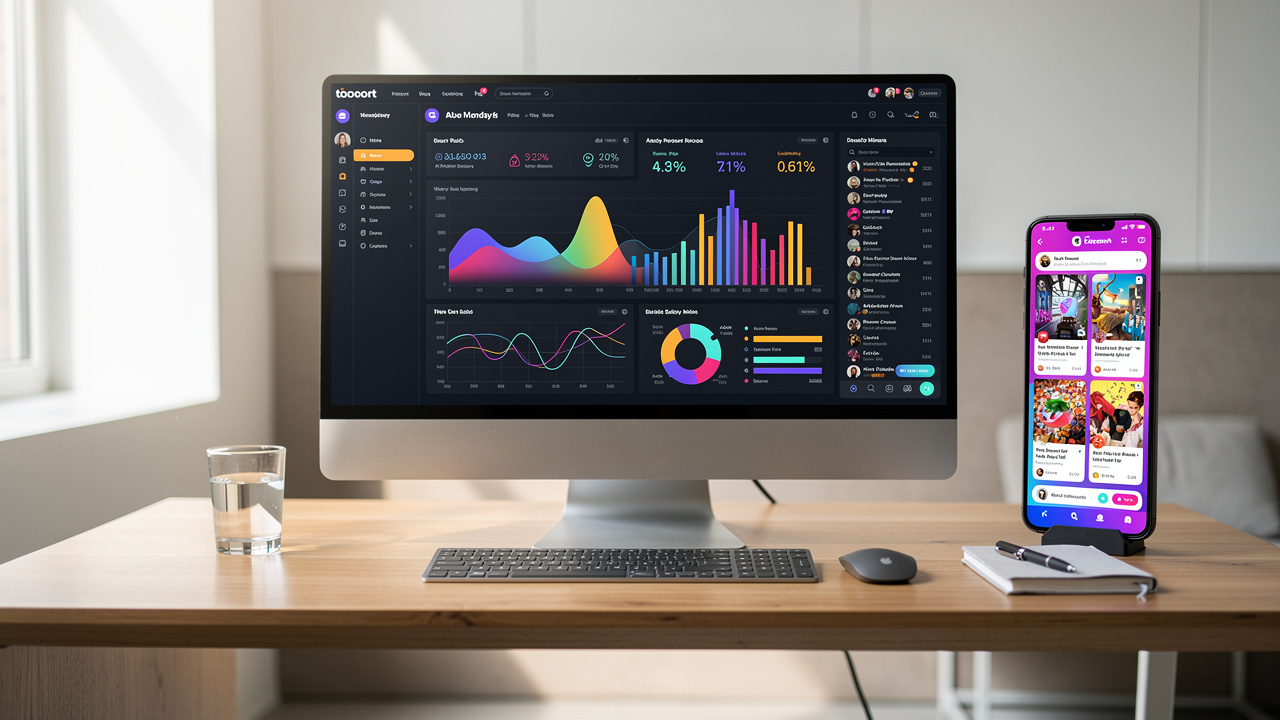
Promotion without measurement feels like guessing. Data turns all of this into a repeatable system, especially when we test different ideas for titles, thumbnails, and distribution.
Key Metrics To Track
In YouTube Studio, several metrics deserve regular attention:
Click-through rate (CTR) — how many people click when they see the thumbnail and title.
Audience retention and average view duration — how well the content keeps attention and matches what the title promised.
Traffic sources — where views come from, such as YouTube search, suggested videos, playlists, or external sites.
Engagement metrics — likes, comments, shares per view.
Subscribers gained from each video.
Watch time (minutes) — the main “currency” YouTube uses when deciding what to show more often.
You can think of it this way:
Metric | What It Tells You | Good Sign |
|---|---|---|
CTR | How attractive your title and thumbnail are | 4–10% or higher, depending on niche and traffic source |
Audience Retention | How long people stay on the video | Few sharp drops; most viewers stay past the first 30–60 s |
Average View Duration | Typical time watched per view | Higher than other videos on your channel |
Watch Time | Total minutes watched | Growing over time for both new and older videos |
Engagement Per View | How much people react (likes, comments, shares) | Consistent responses across uploads |
Subscribers Gained | How many new subscribers each video brings | Clear “winner” videos that bring in a big share |
These numbers, together, show what YouTube sees when it decides how widely to show your content.
Conducting Regular Performance Audits
We set aside time at least once a month to look at the channel from a higher level. During this review, we compare videos to see which topics, lengths, hooks, and thumbnails do best. We also look for videos that have solid content but weaker packaging and test new titles or thumbnails on those.
Questions to ask during an audit:
Which videos brought the most watch time in the last 28–90 days?
Which titles have strong CTR but weak retention?
Which videos gained the most subscribers?
Are certain topics consistently underperforming?
Demographics and viewer location data help us refine who we target with ads, view services, and translations. When we test changes, we try to adjust one main variable at a time so the results stay clear. Some creators also test thumbnails by swapping designs and watching CTR. Over several cycles, this habit leads to steady improvement.
Learning From Top-Performing Content
Our own hits often teach us more than any outside advice. We pull up the top 10 videos by watch time and study what they share in common. It might be the hook, the topic, the pacing, or how we structured the explanation.
We also note which traffic sources fed those videos and what kind of promotion we used at launch. Then we plan more content in a similar style while keeping room for experiments. This approach turns past wins into a template we can use again and again.
“Double down on what already works, then experiment at the edges.”
— A common rule of thumb among analytics-focused creators
Conclusion
Promoting YouTube videos well means working on several fronts at the same time. We prepare videos with strong research, titles, descriptions, and playlists. We then support them with active community engagement, smart cross-platform sharing, and, when it makes sense, paid campaigns or genuine view services. Each layer adds strength to the one below it.
The key is to think in systems, not one-off tricks. First we focus on the free building blocks that every channel needs, such as SEO, watch time, and comments. As our library grows, we add social media promotion, website embeds, and email. When we are ready to push harder, we bring in YouTube Ads or safe services like HypedX to help overcome the cold start problem on important videos.
No promotion plan can fix videos that do not serve viewers. But when we match valuable content with the steps in this guide, we give each upload a fair chance to reach the people who need it. Data helps us see where to adjust and which tactics deserve more attention.
As you think about how to promote YouTube videos from now on, start small and steady rather than trying everything at once. Pick one or two changes for your next upload, track the results, and build from there. If you want extra help with safe, high-retention views and geographic targeting, HypedX is ready to support you. Over time, this mix of real audience connection and strategic promotion can turn your channel into a steady, growing asset.
Frequently Asked Questions
Before we wrap up, let us address some of the most common questions we hear from creators about promoting YouTube videos. These answers give quick guidance you can apply right away.
How Long Does It Take To See Results From YouTube Promotion?
Organic promotion often takes a bit of patience. When you improve SEO, playlists, and engagement, it can take two to four weeks for videos to get indexed and settle into stable search and suggested positions. Paid promotion and genuine view services can bring attention within 24–48 hours. If a video gains traction, YouTube may continue to show it to new viewers for weeks or months. Channel growth adds up slowly at first, then faster as your library grows. A three to six month window is a fair period to judge the impact of a new promotion strategy.
How Much Should I Spend On Paid YouTube Promotion?
The right budget depends on goals and niche, but some ranges help. Many creators start with $5–$10 per day to test audiences, hooks, and formats. Once they see what works, some move to $20–$50 per day for steady growth, while brands with larger goals might spend $100+ per day.
We always look at cost per view or cost per subscriber and compare that with what each viewer is worth to the business. Paid promotion tends to work best on videos that already show promise with organic viewers.
Is Buying YouTube Views Safe For My Channel?
Safety depends completely on the type of service. Buying fake views from bots or very low-quality traffic breaks YouTube rules and can lead to view removal or even channel issues. In contrast, genuine view services such as HypedX focus on real users and normal watch patterns, which keeps everything within platform guidelines.
Safe services:
Never ask for your password.
Deliver views over a reasonable time frame.
Focus on high retention rather than huge numbers at tiny prices.
HypedX uses Smart Delivery Technology and clear policy alignment to protect channels. We always suggest using view services as a boost on top of strong organic promotion, not as a replacement.
What Is More Important, Video SEO Or Paid Promotion?
It is not a choice between one or the other. Video SEO with strong titles, descriptions, thumbnails, and tags forms the base that works for you day and night. Without that base, paid promotion can bring views that do not stick or convert.
Paid methods, including ads and genuine view services, add speed by putting your video in front of the right people faster. The best approach is to fully optimize every video first, then use paid tools on key content you want to push harder, such as flagship tutorials, product launches, or core brand stories.
How Do I Promote Videos Without A Social Media Following?
A big social audience helps, but it is not the only path. You can start by focusing on strong YouTube SEO, playlists, and comments on your own channel. Then look for online spaces where your target viewers already gather, such as subreddits, niche forums, or Facebook groups, and share your videos only when they clearly add value to a discussion.
Small collaborations with creators at a similar level can also send viewers both ways. If you have a website, embed your best videos there and begin building an email list. Services like HypedX can add initial social proof so that organic viewers feel more confident clicking on your content.
Can I Promote Old Videos, Or Only New Uploads?
Older videos can be great candidates for promotion, especially if the topic is still relevant. We often start by refreshing the title, description, and tags to match current search behavior. Adding those videos to new or improved playlists can also extend their life and increase watch time.
For strong evergreen content that never received many views, running paid ads or using a genuine view service like HypedX can bring fresh attention. We also link to older videos from new uploads when the topics connect. This way, your back catalog continues to work for the channel instead of sitting forgotten.